A heap of round bodies squirms and squeals as the chilly night air descends
upon it. Its outer rim of pale exposed flesh shudders in the lantern light like
an inflated over-plucked chicken. Rolling down the streets, it passes crowds of
people who shuffle along under the shadows of rickety buildings, clutching
steaming buns and sticks that drip with jammy sauce. Buttocks jiggle, arms
flail, loincloths flash like crumpled smiles into the dark….
No, this isn’t a scene from a Heironymous Bosch painting. It is, in fact,
the somewhat less infernal Hadaka Matsuri, or Naked Man Festival. Yes, that’s
right, a festival for hoards of Japanese men to brave freezing temperatures in
barely more than their birthday suits.
The Naked Man Festival has a long tradition in Japan, with a deep well of
symbolism that goes beyond the surface of its wrinkled hindquarters. And if one
were to flip through a Japanese history book, references to nudity would come
hard and fast - from images of feudal peasants working fields unclothed, to
public baths peppered with naked bodies. Given these aspects of Japanese
history and culture, it would be easy to assume that nudity is commonplace in
Japan, and not necessarily linked to sexuality as it is in the West.
In “Pink Samurai,” Nicholas Bornoff writes: “At the two extremes of female
and male in popular culture, one finds the geisha and the sumo wrestler: the
dainty living doll standing for femininity and the mountainous icon of macho
flesh with the little porcine eyes.”
"There must be some kind of way out of here,"
Said the joker to the thief,
"There's too much confusion,
I can't get no relief.
Businessman they drink my wine,
Plowman dig my earth
None will level on the line, nobody offered his word, hey"
"No reason to get excited,"
The thief, he kindly spoke
"There are many here among us
Who feel that life is but a joke
But you and I, we've been through that
And this is not our fate
So let us not talk falsely now, the hour is getting late"
All along the watchtower
Princes kept the view
While all the women came and went
Barefoot servants, too
Outside in the cold distance
A wildcat did growl
Two riders were approaching
And the wind began to howl
Kunio Sunow, president of the Ishinomaki Fish Market, shows off gold at his office in Ishinomaki on February 22, 2013
AFP
ISHINOMAKI —
A city devastated by the 2011 tsunami disaster remains mystified more
than two weeks after receiving anonymous gifts of gold bars worth over
20 million yen.
A fish market in Ishinomaki, Miyagi Prefecture, received a parcel
containing gold bars weighing a total of two kilograms in early
February, about a month ahead of the disaster’s second anniversary on
March 11.
Kunio Sunow, president of the Ishinomaki Fish Market which was
destroyed in the disaster, said he casually opened the mystery parcel
addressed to him.
“I was stunned because… in there was 24-carat gold in two plates,” he told AFP.
“We don’t have to identify this person of goodwill… but we want to
let them know we are grateful. If possible, I want to invite him or her
to the completion of a new market” set for early 2015, he added.
More gold bars were sent to other area organizations. They were
mailed from Nagano in packages which contained only the word
“assistance” on the inside.
“We couldn’t be more grateful,” said Seitaro Omori, who works for Manbow, a public-private company helping rebuild Ishinomaki.
Omori said handwriting on all the parcels appeared to be the same,
suggesting one good Samaritan was behind the gifts. Some of the bars
were wrapped in pages from a health magazine for seniors, he added.
Over at the Ishinomaki Revival Support Network, the shiny gift sparked disbelief.
“I opened the mail half-worried as it was heavy… and then everybody
in the room said ‘Wow!’,” said Yoshie Kaneko, who heads the non-profit
group.
Ishinomaki was devastated by the 9.0 earthquake and massive tsunami it generated on March 11, 2011.
The disaster killed nearly 19,000 people, including more than 3,000
in Ishinomaki, and sparked the world’s worst nuclear accident in a
generation.
At current market prices, the total of six kilograms of gold bars could be worth more than 20 million yen.
“100 years in Tokyo” is a series of 202 portraits, photographed in
Tokyo in 2009-2012. The book contains portraits of men and women for
each year of age from 0 to 100.
The book has its origins in photographer Petri Artturi Asikainen’s
deep interest in the city. He has lived in Tokyo on several occasions
since 2009. For him, the visual abundance of the city makes it
exceptionally fascinating. It feels as
familiar as any Western metropolis, yet completely different and strange.
The theme of Asikanen’s pictures is the full range of human life.
Simultaneously, he hopes to have succeeded in creating a portrait of
Tokyo. It is the people that make the city. A flip through video of the
book is available here.
Asikainen is a Finnish photographer, who has worked on freelance
basis for 20 years. He has contributed to several newspapers, magazines
and corporate publications, specializing in portraits and photo
editorials.
The book is available in Tokyo at Gallery and bookstore Sokyusha,
NADiff a/p/a/r/t, NADiff X10 (Tokyo Metropolitan Museum of Photography
Bookstore), Aoyama Book Center Aoyama and Roppongi; Junkudo Ikebukuro,
Kichijoji and Umeda (Osaka); Tsutaya T-Site Daikanyama and Shelf.
Price (including tax): 3,675 yen
ISBN: 9789526047003
216 pages, hard cover
Published by Aalto ARTS Books, Musta Taide
Languages: Japanese, English and Finnish
A study released by the ocean-conservation group Oceana reveals that
consumers in the United States often purchase fish that has been
mislabeled. Read related article.
Higashi Kurume Station..the way to Ikebukuro and the cheap movies and Haneda airport
Ed “Mr Lucky” Martin
GALATIANS 2: 20, 21
VISIT SAN DIEGO
SPECIAL BOOK~ORDER NOW!
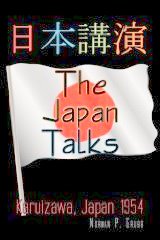
Norman Grubb gave this series of addresses in 1954 at the Evangelical Missionary Association of Japan and Deeper Life Conference in Karuizawa, Japan. In these eight days of love and fellowship he pours out his own 'missionary heart' to them as only one who has "walked their walk" can do!


 Kunio Sunow, president of the Ishinomaki Fish Market, shows off gold at his office in Ishinomaki on February 22, 2013
AFP
 Kunio Sunow, president of the Ishinomaki Fish Market, shows off gold at his office in Ishinomaki on February 22, 2013
AFP