MERRY CHRISTMAS & HAPPY HOLIDAYS 2022

we touched this same spot with our hands, our feet, our gaze and our dreams

Thursday, January 11, 2007

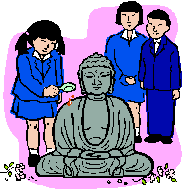
Japanese students face chopstick test

TOKYO • It’s no secret that the Japanese are obsessed with education but in addition to the usual reading, writing and arithmetic some students will soon be tested on their ability to use... chopsticks.
Applicants to a private high school for girls in Sasebo in southern Nagasaki Prefecture will be asked to hold and move various small objects including beans and marbles with chopsticks as part of the entrance exam.
“This is simply one factor to assess whether these girls can handle chopsticks correctly, which is really the most basic element in education,” said Katushi Hisata, the vice principal of Hisata Gakuen Girls' High School.
“It's surprising to see how many children don't know how to hold chopsticks correctly, which is a part of the Japanese culture's beauty,” he said by telephone, adding that only 20 per cent of elementary students use chopsticks correctly.
The westernisation of Japan's eating habits means that use of the knife and fork is increasingly common, while a growing number of children with working parents eat alone, leaving them less well versed in chopstick etiquette.
The school's vice principal accused celebrities appearing on television food and cookery shows of using chopsticks wrongly.
The school, built in 1902, has space for 40 students in each grade, and has traditional classes in tea ceremony, kimono-fitting, etiquette and cooking as part of the wider curriculum.
“We are aware that this kind of exam won't make students jump up and come running to us, because this is unlike normal high schools that advertise success rates of students entering prestigious universities,” Hisata said.
“But we do know that education is not only about having brains, but also etiquette,” he added.

Sunday, January 07, 2007

Sword-makers ceremony

Sword-makers ceremony sparks public interest in Gifu

8:19pm Saturday, January 6

SEKI, Gifu -- Hundreds of people gathered to watch sword makers in Seki, a town famous for producing Japanese swords, as the craftsmen showed off their skills in an annual New Year's ceremony expressing hope for safety in the sword-making industry.


A total of 19 sword makers dressed in white gowns and formal headwear took part in the traditional ceremony on Tuesday, working with steel heated to over 1,000 degrees Celsius.
In the ceremony a type of Japanese steel called "tamahagane," which is mainly used to make samurai swords, was heated to 1,200 degrees, and the sword makers took turns beating it with sledgehammers.
While the sword makers worked together in rhythm, spectators cheered as they listened to the sound of the hammers hitting the steel and watched sparks flying from the metal.
During the ceremony the flattened steel was repeatedly folded and layered, a process that is said to remove impurities in the metal and create a strong sword that looks good. (Mainichi)

Saturday, January 06, 2007

Inventor of "Cup Noodle" dies

Inventor of "Cup Noodle" Momofuku Ando dies at 96
3:46pm Saturday, January 6
OSAKA -- Momofuku Ando, inventor of the instant ramen noodle and founding chairman of Nissin Food Products Co., died of a heart attack on Friday evening. He was 96.
Born in Taiwan, Ando initially set up a trading company in Taipei before founding a wholesale company in Osaka in 1933.
Ando decided to deal in food after seeing people suffer from poor diet during World War II. Later, he built a laboratory in the garden of his home in Ikeda, Osaka Prefecture, and began developing instant noodles there.
By trial and error Ando found a method to dry noodles using hot oil, and finally succeeded in the development of the world's first instant noodle in 1958, called "Chicken Ramen."
The instant noodle was a big hit, and his company marketed instant "Cup Noodles" in 1971.
Ando opened an instant ramen museum in Ikeda in 1999, where visitors can experience the creation of instant noodles. (Mainichi)

Wednesday, December 06, 2006

Tokyo blues


Fretting about job prospects and their place in society, only 8% of young Japanese describe themselves as happy. A global poll of 16-34 year olds, conducted by MTV Networks International, has put Japan at the bottom of a “Wellbeing Index”. The misery is particularly acute in Tokyo, where ever more young people flock in search of better employment prospects; “pressure to succeed” was a commonly cited cause for despondency. But Japan’s lack of optimism, though extreme, was part of a pattern across the developed world, where less than 30% of young people, on average, said they were happy with the status quo. By contrast, 84% of young Chinese expected their lives to become more enjoyable in the future. Indians were at the top of the index.

Saturday, November 25, 2006

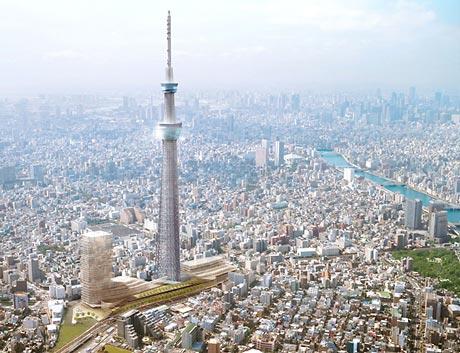
Planners reveal design of world's tallest tower for downtown Tokyo


TOKYO — Japanese planners on Friday revealed the design of a huge broadcast tower that is set to become the world's tallest structure upon completion in 2011.
The tower will stand 2,013 feet tall, according to Tobu Railway, which has provided land for the project. It will claim the title from the CN Tower in Toronto, a 1,815-foot communications structure and outlook point that is the world's tallest freestanding structure.
Dubbed the "New Tokyo Tower," the building will replace a 1,090-foot tower built in 1958.
The tower, designed by award-winning Japanese architect Tadao Ando and sculptor Kiichi Sumikawa, will stand on a triangular foundation. But its slender body will turn into a cylinder as it stretches upward, its bluish-silver color blending into the sky.
The tower is being built by Japan's six top broadcasters and is expected to greatly bolster television and radio transmissions in the capital.
Though it competes with a plethora of skyscrapers, the old tower is one of Tokyo's most visible landmarks and is visited by 2.5 million tourists each year. The new tower will stand in the capital's Sumida ward, an area between the Sumida and Arakawa rivers known for its old-Tokyo ambience.
Sumida ward beat out 15 areas in Tokyo to host the tower.

Tuesday, November 21, 2006

Prayer Update from Switzerland

Prayer Update
Roger & Gaynor Ridley
rgridley@t-online.de
November 2006

Praise Points

We are having amazing team meetings each Sunday at 4pm. Mosaic Basel – Lörrach is well on the way to being launched.

We had the remarkable privilege to hear from David & Susie Nelson, Church planters in Salt Lake City, Utah www.k2thechurch.com Boy has God used them!! God brought them to Basel especially to speak with us, encourage us and speak to the team! (Well, it feels like that anyway).

To be able to meet Erwin McManus (Mosaic LA) briefly whilst he was speaking at a Young People’s Conference in Basel 18-19 November.

We mentioned our bicycles last update! We are making the most of them before winter really sets in. Roger is probably keener than Gaynor!!

Our beautiful family. Tim & Amy, Glenda & Tom in Melbourne; Jocelyn in Japan teaching English but will be with us from 23 December.

For our faithful supporters who really do have a partnership in what we are doing.

Our continued good health and fitness.

Prayer Points

Pray that our team of 15 people will learn from what the Nelson’s shared with us and be more proactive in seeking to reach people who don’t follow Christ.

We pray God will excite people who hear about us to join our team.

We have a team (8) coming to Lörrach for 1 week from 28 November to help us identify where the English speakers in this area are. For good opportunities, boldness and knowing God’s leading.

Our first public event! A Chamber Concert in Basel on 1 December. More details on website www.expatriates.com Click on Switzerland and then Events!!

Continuing to persist with learning German. Discipline to do a little homework each day.

For continued monthly support. We thank God for a small increase, but we do need more regular support.

Thursday, November 02, 2006

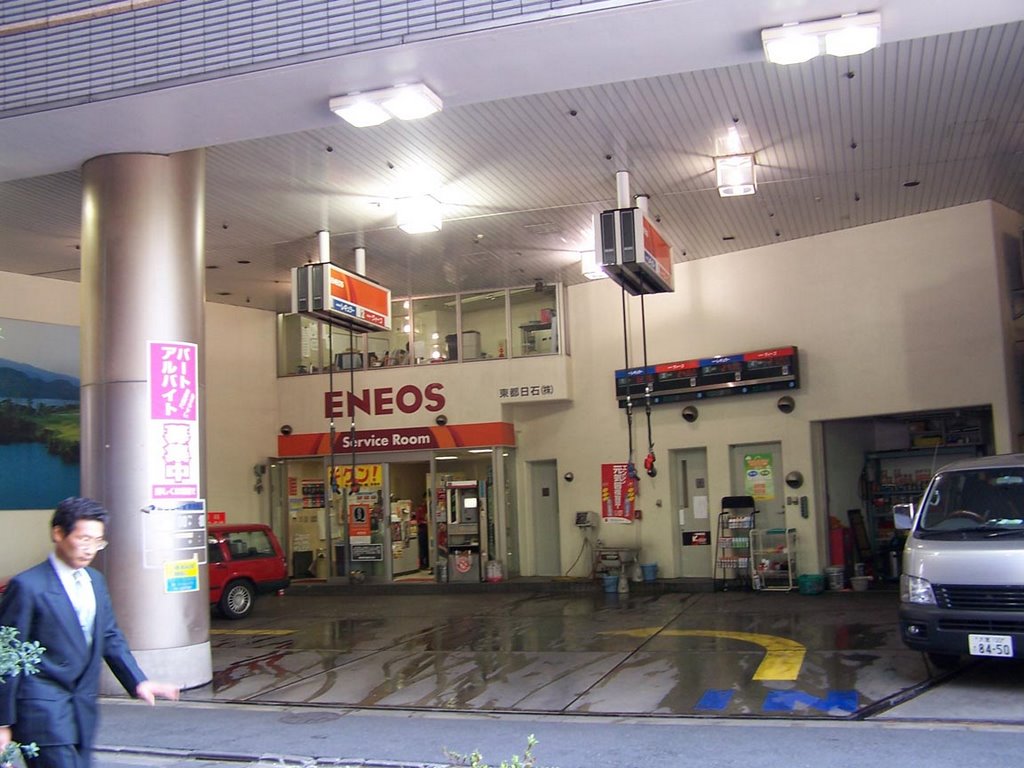
Price of gas below 140 yen per liter


The average retail price of regular gasoline was 139.50 yen per liter as of Monday, down 0.70 yen from the previous week and falling below 140 yen for the first time in three months, the Oil Information Center said Wednesday.
The fall in the price of gas is gaining momentum and there is speculation that it will go on dropping as crude prices fall. Gas stations in some parts of the Tokyo metropolitan area -- where competition is fierce -- have reduced their regular gas prices to below 130 yen, center officials said.
Gasoline prices are expected to fall further as oil wholesalers' recently cut the prices of gasoline and other petroleum products for shipment in November by margins of between about 1.0 yen and 3.50 yen per liter.

Saturday, October 28, 2006

Tokyo woos N.Y. tourists


Sunday, Oct. 29, 2006

NEW YORK (Kyodo) The Tokyo Metropolitan Government kicked off a Tokyo Fiesta promotional event in New York on Friday as part of efforts to double the number of overseas tourists.
Visitors at the Tokyo Fiesta event in New York on Friday watch a craftsman as he makes a "chochin" lantern. KYODO PHOTO
"I understand that within the United States, New York has the greatest number of residents that travel abroad," Tokyo Vice Gov. Yasuo Sekiya said. "I hope more New Yorkers will visit Tokyo."
The two-day festival at New York's famed Grand Central Stations is focused on both traditional Japanese crafts such as "chochin" (lantern making) and ukiyo-e woodblock prints as well as new technology and art from young students and artists.
Videotapes featuring Tokyo are being shown at the venue and craftsmen are demonstrating how to make lanterns and "sudare" blinds.
A three-dimensional film showcasing Tokyo's cultural highlights, koto performances, sake tastings and Japanese cream puffs, or "choux cream," are also featured.
The event is highlighting major upcoming events in Tokyo, such as the first Tokyo Marathon in February, and an international anime fair in March.
"I'd love to go to Tokyo," said Joanna Minardi, a ukiyo-e fan who came especially to see the reproductions of 30 of Ando Hiroshige's "One Hundred Views of Famous Places in Edo."
"I think the Japanese are extremely brilliant," she added.
A 61-year-old visitor from Massachusetts who used to live in Japan said the event made him want to visit the country again.
Tokyo and New York have been sister cities since 1960. They have engaged in a series of exchanges meant to increase cultural understanding over the last 40 years, including a baseball exchange and various arts programs.
The first fiesta was held in New York in February.

Friday, October 27, 2006

List of areas where discrimination exists posted online

The locations of communities where people face discrimination in Japan has been uploaded on a popular Internet chat site, it has been learned.
Officials at the Justice Ministry's Human Rights Bureau said that it was regrettable for the list to be carried online because they believe it will only encourage more discrimination.
"As far as we know, this is the first time that the list has been posted online," one ministry official said. "We don't know if the list is correct or not. We regret it because such an act can incite discrimination."
A local government official in Mie Prefecture noticed the list on the "2-Channel" chat site on Oct. 21, according to officials of the ministry and the Osaka Municipal Government. The list is called "Buraku Chimei Sokan" in Japanese.
The official reported the discovery to a national organization formed by 35 local governments to tackle discrimination. Officials at the ministry noticed on Oct. 25 that the list had already been deleted from the site. They had intended to ask 2-Channel to remove it.
Previously, some 10 lists of communities where residents face discrimination had been found nationwide.
The Osaka prefecture chapter of the Buraku Liberation League, an organization that pledges to fight discrimination against minorities, announced on Sept. 30 that it has collected 36 floppy discs containing lists of areas where people face discrimination.
"The lists also (mistakenly) contain new locations of areas where discrimination doesn't exit. I don't know whether these two lists are the same as those formerly found," an official of the league said. "I am afraid a new type of human rights discrimination will emerge as anyone can now read such lists (on the Internet)." (Mainichi)

Thursday, October 26, 2006

Buddhism Lagging in Japan


TOKYO, Oct. 26 - The Kamiyacho Open Terrace cafe in central Tokyo has all the trappings of a trendy establishment - good coffee, homemade dessert, an airy terrace. But what makes the cafe truly interesting is its setting: inside the Buddhist Komyoji temple, one of many across Japan offering new services - concerts, discos, yoga classes - in a struggle to stay relevant despite an increasingly secular society. "For Japanese, temples were once a part of daily life," said 24-year-old owner, and monk, Keisuke Matsumoto. "I want Kamiyacho Open Terrace to be a place people can drop in casually ... and perhaps become a little curious about Buddhism." The young priest will need patience and optimism. More than a millennium after it first arrived from mainland Asia in the sixth century, Buddhism is in crisis. About 94 million Japanese were registered as Buddhist in 2005, almost three-quarters of the country's population. But for many, the only time they enter a temple is to attend a funeral - driving many of the country's 75,000 temples to the verge of bankruptcy.

Click on the title to go to the full story